The Burnout Factor No One Names
Your Best Leaders Aren’t Just Doing Too Much. They’re Carrying Too Much.
Dean Eric Smith helps leaders reclaim lost capacity by releasing Emotional Overhead — the betrayals, grudges, and regrets that quietly erode judgment, composure, and presence.
Trusted By Teams At


I've worked with speakers for years, and that was one of the best presentations I've ever seen.
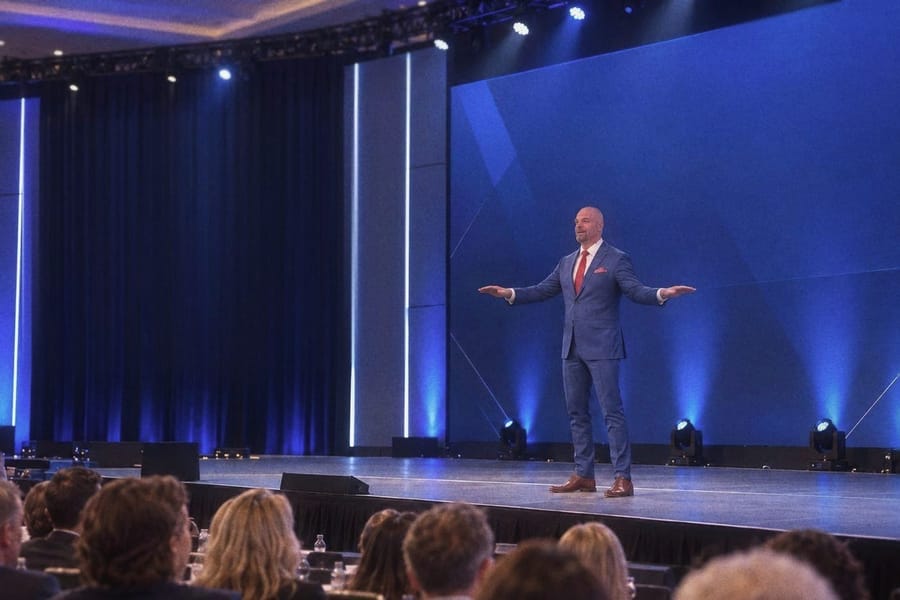
Signature Executive Keynote
The Unburdened Leader
For C-suite and senior leaders. Dean names the Emotional Overhead draining executive capacity, and gives leaders a repeatable method to set it down and lead unburdened — and the first step toward getting their decision quality, presence, and resilience back.
Burnout is the symptom. Reclaim the capacity beneath it.
Learn more →
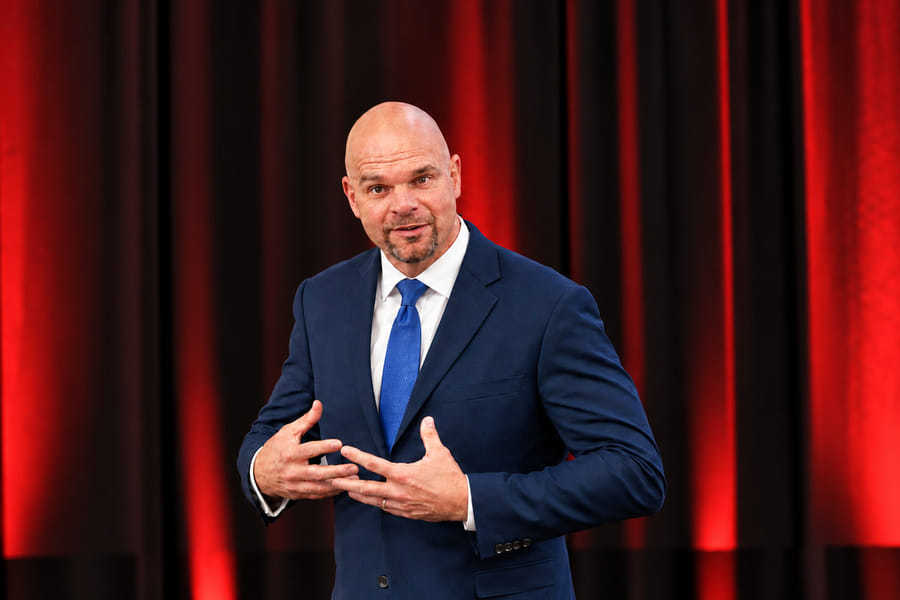
Healthcare Leadership Keynote
The Capacity Crisis
For healthcare executives and physicians. Dean reframes burnout as what it actually is, a capacity crisis, and shows how releasing the Emotional Overhead beneath it restores judgment, steadiness, and the capacity to lead and to care — the things retention follows.
Stop treating burnout. Start restoring capacity.
Learn more →
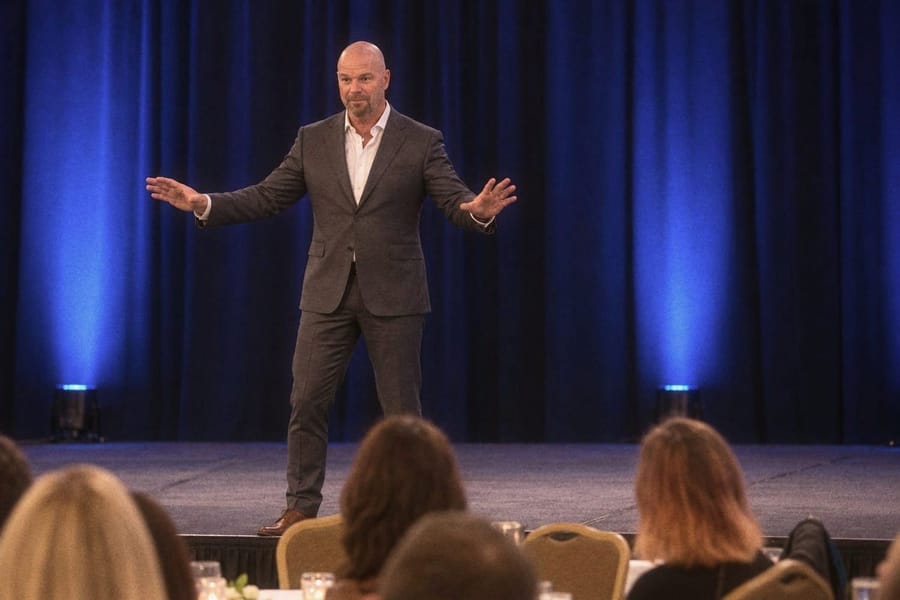
Half-Day Transformation
The E.D.G.E. Intensive
Either keynote in the morning, then the Half-Day Workshop in the afternoon. Leaders leave with a regulation practice already underway, a 30-day on-ramp, and the framework worked through themselves.
First they release. Then they lead.
Learn more →
Planning an event? Fees, formats, A/V, and the full speaker kit are on the Meeting Planners page.
The Leadership Capacity Audit
Burnout Has Reached the Corner Office.
Underneath the workload sits the part of the problem almost no one names: the betrayals, grudges, and regrets your leaders carry. That is Emotional Overhead — capacity you are already paying for but cannot use. Dean Eric Smith gives high performers a way to set that weight down and lead at full capacity, without easing off the gas.
You can't rest your way out of a threat your brain never switches off.
Emotional Overhead never stays private. Wharton’s Sigal Barsade proved emotional states transmit through a group by cues no one consciously registers. Your private weight becomes the room’s weather. And it lands on the four things you were hired for.
Where It Shows Up
Decision Quality
Your Judgment
Under sustained threat, the brain routes resources toward speed and away from deliberation. You make the fast call instead of the right one — and you make it on your worst day, not your best.
Emotional Regulation
Your Composure
Unresolved resentment keeps a low-grade stress response running in the background. A stress response that never switches off is what erodes the executive function your composure depends on.
Psychological Safety
Your Room
People feel a dysregulated leader before they can name it, and their own threat detection comes online in response. Your team isn't underperforming. Part of their attention is simply busy watching you.
Long-Term Vision
Your Horizon
Long-range thinking needs a mind that isn't busy managing threat. It's hard to plan ten years ahead while part of you is still relitigating something from three years ago.
Why Dean
Most burnout advice manages the symptoms. Dean works on what’s underneath.
When a leader carries an unresolved betrayal or conflict, repeated recall can reactivate the stress response and pull attention, working memory, and judgment toward the grievance. Sustained over time, that load is associated with reduced function in the prefrontal cortex, the seat of reasoning, decision-making, and emotional regulation.
That is the hidden bottleneck on leadership capacity.
Dean Eric Smith knows this terrain from the inside. An Executive Leadership Coach who has worked with high achievers since 2013, he is also a man who carried his mother's murder for years, certain he was fine, before doing the long work of forgiving the man who killed her, a journey captured in the award-winning documentary Live to Forgive. What he carried was extreme. The pattern was not. High performers carry smaller weights the same way: functioning well, certain they’re fine, while the cost quietly compounds.
He discovered that the mechanism holding executives back is the same one he had to master in his own life, and he built it into the E.D.G.E. Forgiveness Development Method. Forgiveness, in this work, is a secular leadership discipline: practiced in private, needing nothing from anyone else, and letting no one off the hook. This is not therapy. It is a repeatable, evidence-informed performance practice for the highest-stakes rooms.
Dean doesn’t deliver a presentation; he creates an experience. With my sales team, it translated directly to stronger performance, increased accountability, and exceptional market share growth.
Give your leaders their capacity back.
Whether it's a keynote that resets the room or coaching that resets a leader, the work is the same: release what's draining performance so your people can lead unburdened, at full strength again.
Now booking 2026 and 2027 engagements. Coaching starts within weeks, not months.
Planning an event? Fees, logistics, and the full speaker kit are on the Meeting Planners page.